SUZANNE CÉSAIRE:
The Great Camouflage
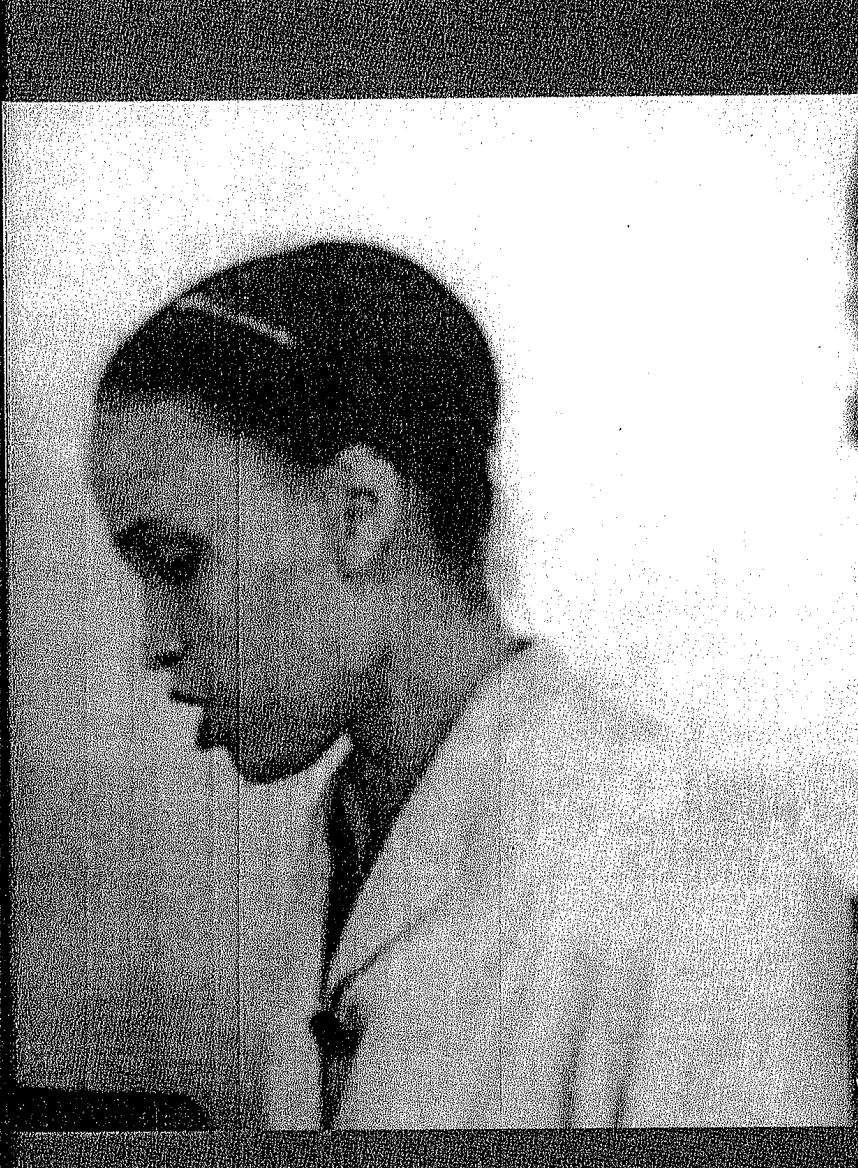
Photo of Suzanne Césaire
Suzanne Césaire––Martinican surrealist and communist–– founded the journal Tropiques, along with her husband Aimé and fellow surrealist René Ménil. In it, they extended the ethos of Négritude into anticolonial argument; developed a distinct Antillean identity in their knot of cultures, histories, and geographies; and explored surrealism as a mode uniquely suited to the expression of this intense confluence, wretched with antinomy. Césaire published only seven essays in her lifetime, all written during the brief existence of Tropiques, 1941 - 45. "The Great Camouflage," the last she wrote and the closing text of the journal, is not a theoretical text. It is the enactment of the precepts she'd developed in the preceding years, deploying surrealism to find adequate expression for Antillean sublimity and horror. It is also demonstration of an obvious literary talent, a rare one, capable of aesthetically reconciling the massive tensions of her tiny island, capable of broaching new consciousness through fidelity to confusion. I don't know why she stopped writing. There are assumptions to make: she raised six children, and taught, and played wife besides. She told her daughter Ina, "yours will be the first generation of women to choose." I don't know the precise contours of the choice she did not seem to have. I wish we had more of her to read. I'm grateful we get to republish some of her contributions now. –J.A.B.
There are, melded into the isles, beautiful green waves of water and of silence. There is the purity of sea salt all around the Caribbean. There is before my eyes, the pretty square in Pétionvile, planted with pines and hibiscus. There is my island, Martinique, and its fresh necklace of clouds buffeted by Mount Pélé. There are the highest plateaus of Haiti, where a horse dies, lightning-struck by the age-old killer storm at Hinche. Next to it, his master contemplates the land he believed sound and expansive. He does not yet know that he is participating in the island's absence of equilibrium. But this sudden access to terrestrial madness illuminates his heart: he begins to think about the other Caribbean islands, their volcanoes, their earthquakes, their hurricanes.
At this moment off the coast of Puerto Rico a huge cyclone begins to spin its way between the seas of clouds, with its beautiful tail sweeping rhythmically the semi-circle of the Antilles. The Atlantic takes flight toward Europe with great oceanic waves. Our little tropical observatories begin to crackle with the news. The Wireless Telegraph Services go crazy. The boats flee, but to where? The sea swells, here, there, with a delicious bound, the sea stretches its limbs for a greater consciousness of its elemental water power, faces dripping, sailors grit their teeth, and we learn that the southeast coast of the Haitian Republic is in the path of the cyclone passing at a speed of thirty-five miles per hour, making its way toward Florida. Consternation seizes objects and the people spared at the fringes of the wind. Do not move. Let it pass. . .
At the center of the cyclone everything cracks, everything collapses in the ripping sound of great manifestations. Then the radios go silent. The great line of palm trees of cool wind unfurled somewhere in the stratosphere, there where no one will go to follow incredible iridescences and waves of violet light.
After the rain, the sun.
The Haitian cicadas are thinking of screeching love. When there is no longer a drop of water in the burnt grass, they sing furiously that life is beautiful, they explode in a cry too vibrant for an insect body. Their thin film of dried silk stretched to the breaking point, they die while letting surge forth the least moist scream of pleasure on earth.
Haiti goes on, enveloped in the ashes of the sun sweet to the eyes of the cicadas, with scales of the mabouyas, with the metallic face of the sea that is no longer of water but of mercury.
Now is the moment to look out the window of the aluminum clipper with its great banking turns.
Once again the sea of clouds is no longer virginal since the Pan American Airways System planes have been flying through. If there is a harvest maturing, now is the time to try to glimpse it, but in the prohibited military zones, the windows are closed.
On the planes they bring forth the disinfectants, or the ozone, whatever, you will see nothing. Nothing but the sea and the indistinct outline of lands. One can only guess the easy lovemaking of fish. They make the water move and wink amicably for the aircraft's porthole. Our islands seen from above, take on their true dimension as seashells. And as for the hummingbird-women, tropical flower-women, the women of four races and dozens of bloodlines, they are there no longer. Neither the heliconia, nor the frangipani, nor the flame tree, nor the palm trees in the moonlight, nor the sunsets unlike any other in the world. . .
Yet they are there.
Yet fifteen years ago, a revelation of the Antilles, from the eastern flank of Mount Pélé. From that point on, I knew, very young, that Martinique was sensual, coiled upon itself, stretched out, unwound in the Caribbean, and I suddenly thought about the other islands which are so beautiful.
Once again in Haiti, during the summer mornings of '44, the presence of the Antilles, more than perceptible, from places in which, like Kenscoff, the view over the mountains is unbearably beautiful.
And now total insight. My gaze, over and beyond these shapes and these perfect colors, catches, upon the very beautiful Antillean face, its inner torments.
For the pattern of unfulfilled desires has trapped the Antilles and America. From the time of the arrival of the conquistadors and the rise of their technical know how (beginning with firearms), the lands from across the Atlantic have changed, not only in facial appearance but in fear. Fear of being surpassed by those who remained in Europe, already armed and equipped, fear of being in competition with people of color quickly declared inferior in order to better beat them down. It was necessary first and at all costs, be it even the price of the Black slave trade's infamy, to re-create an American society richer, more powerful, better organized than the European society left behind - yet still desired. It was necessary to take this revenge upon the nostalgic hell that was vomiting its adventurer demons, its galley slaves, its penitents, its utopians upon the shores of the New World and its islands. For three centuries, colonial adventurism has continued - the wars of independence are only an episode— and the American people, whose behavior vis-à-vis Europe has remained often childish and romantic, are still not freed from the grip of the old continent. Of course it is the Blacks of the Americas who suffer the most, in a daily humiliation, from the degradations, the injustices, and the pettiness of colonial society.
If we are proud to observe everywhere on American soil our extraordinary vitality, if definitively this vitality seems to hold out the promise of our salvation, one must, however, dare to say that refined forms of slavery still run rampant. Here, in these French islands, they debase the thousands of Blacks for whom a century ago the great Schœlcher sought, along with freedom and dignity, the title of citizen. Since many among the French seem determined to tolerate not even the slightest shadow being cast upon that visage, one must dare show, on the face of France, illuminated with the implacable light of events, the Antillean stain.
The degrading forms of the modern wage-system continue to find in our homeland a ground on which to flourish without constraint.
There the system will dump, along with outmoded material from their factories, these few thousands of second-rate manufacturers and grocers, this caste of would-be colonizers responsible for the human deprivation of the Antilles.
Released onto the streets of their capitals, an insurmountable timidity fills them with fear among their European brothers. Ashamed of their drawling accent, of their unrefined French, they sigh longingly for the peaceful warmth of Antillean houses and the patois of the Black "nanny" of their childhood.
Quite prepared to engage in all types of betrayals in order to defend themselves against the constantly rising tide of Blacks, if the Americans had not just claimed that the purity of their blood was more than suspect, these same people would have sold themselves to America, as they had during the '4os when they declared loyalty to the Vichy admiral: Pétain being for them the sacrificial altar of France, thus Admiral Robert necessarily became "the tabernacle of the Antilles."
In the meantime the Antillean serf lives miserably, abjectly on the lands of "the factory," and the mediocrity of our townships is a nauseating spectacle. In the meantime the Antilles continues to be paradise, this soft rustling of palms. . .
Irony that day was a shining vestment full of sparks, each one of our muscles was expressing in a personal manner a fragment of desire scattered among the mango trees in blossom.
I was listening very attentively, without being able to hear your voices lost in the Caribbean symphony that was launching whirlwinds of water against the islands. We were like thoroughbreds, restrained, pawing the ground with impatience, at the edge of this salt savannah.
On the beach there were some "metropolitan functionaries.” They were landed there, without conviction, ready to take off at the first signal. The new arrivals are hardly adapting to our "old French territories." When they lean over the malefic mirror of the Caribbean, they see therein the delirious reflection of themselves. They dare not recognize themselves in this ambiguous being, the Antillean. They know that the métis have a part of their blood, that they are, like them, of Western civilization. Of course it is understood that the "metropolitans" are unaware of the prejudice of color. But colored descendants fill them with fear, in spite of the smiles ex-changed. They were not expecting this strange bourgeoning of their blood. Perhaps they would like not to respond to the Antillean heir who shouts, but does not shout out "my father." However one will have to deal with these unanticipated boys, these charming girls. One must govern these unruly people.
Here is an Antillean, great-grandson of a White colonizer and a slave Negress. Here he is deploying, in order "to get up and running" in his island, all the energies formerly necessary to greedy colonizers for whom the blood of others was the natural price of gold, all the courage necessary to African warriors who perpetually earned their living from death.
Here he is with his double strength and double ferocity, in a dangerously threatened equilibrium: he cannot accept his negritude; he cannot whiten himself. Spinelessness takes hold of this divided heart. And, with it, the usual trickery, the taste for "schemes"; thus blossoms in the Antilles this flower of human baseness, the colored bourgeoisie.
On the roads bordered with glyciridia, delightful little black kids, ecstatically digesting the roots cooked with or without salt, smile at the luxury automobile passing by. They feel abruptly, deep in their navel, the need one day to be the masters of a beast equally as supple, shiny, and powerful. Years later, dirtied with the garage grease of happiness, one sees them miraculously give the spark of life to junkyard wrecks, disposed of at a very low price. By instinct, the hands of thousands of young Antilleans have weighed steel, found joints, loosened screws. Thousands of images of gleaming factories, virgin steel, liberating machines, have filled the hearts of our young workers. There is, in hundreds of squalid warehouses where scrap iron rusts, an invisible vegetation of desires. The impatient fruits of revolution will spring up from it, inevitably.
Here, between the wind-smoothed mountains is Free-Peoples-Estates. A peasant who himself was not swept up in the hoopla surrounding the mechanical adventure, leaned against the great Mapou tree of spirits that shades an entire side of the mountain, and felt rising within himself, through his toes dug firmly into the mud, a slow vegetal up-thrust. He turned toward the sunset to discern the next day's weather—the orangey reds indicated to him that planting time was approaching—his gaze is not just the peaceful reflection of the light, for it grows heavy with impatience, the same kind that stirs up the land of Martinique, his land that does not belong to him yet is however his land. He knows that it is with them, the workers, that the land has a shared and common cause, and not with the colonial Whites or the mulattoes. And when, abruptly, in the Caribbean night, all decked out in love and quiet, there bursts forth the call of drums, the Blacks ready themselves to respond to the desire of the earth and of the dance, but the landowners lock themselves up in their mansions, and behind their metallic spiderweb curtains, they are, under the electric light, so like pale and entrapped moths.
Around them the tropical night swells with rhythms, Bergilde's hips have taken their cataclysmic speed from the heaving rising from the depths to the flanks of the volcanoes, and it is Africa herself who, from across the Atlantic and the centuries pre-dating the slave-ships, dedicates to her Antillean children the gaze of sun-filled desire that the dancers exchange. Their cry exclaims in a husky and full voice that Africa is still there, present, that she waits, undulating, devourer of Whites, immensely virgin in spite of colonization. And upon the faces constantly bathed in marine effluvia close to the islands, on these small restricted lands surrounded by water, like great impassable gulfs, the tremendous wind passes by, come from a continent. Antilles-Africa, thanks to the drums, the nostalgia for earthly spaces lives on in the hearts of these islanders. Who will overcome this nostalgia?
The heliconia shrubs and flowers of Absalon Forest bleed over the chasms, and the beauty of the tropical landscape goes to the heads of the poets passing by. Across the swaying latticed networks of the palms they can see the Antillean conflagration rolling across the Caribbean that is a tranquil sea of lavas. Here life lights up in a vegetal fire. Here, on these hot lands that keep alive geological species, the fixed plant, passion and blood, in its primitive architecture, the disquieting ringing suddenly issue from the chaotic backs of the dancers. Here the tropical vines rocking vertiginously, take on ethereal poses to charm the precipices, with their trembling fingertips they latch onto the ungraspable cosmic flurry rising all throughout the drum-filled nights. Here the poets feel their heads capsize, and inhaling the fresh smells of the ravines, they take possession of the wreath of the islands, they listen to the sound of the water surrounding the islands, and they see tropical flames kindled no longer in the heliconia, in the gerberas, in the hibiscus, in the bougainvilleas, in the flame trees, but instead in the hungers, and in the fears, in the hatreds, in the ferocity, that burn in the hollows of the mountains.
It is thus that the Caribbean conflagration blows its silent fumes, blinding for the only eyes that know how to see, and suddenly the blues of the Haitian mountains, of the Martinican bays, turn dull, suddenly the most blazing reds go pale, and the sun is no longer a crystal play of light, and if the public squares have chosen the laceworks of Jerusalem thorn as luxury fans against the fieriness of the sky, if the flowers have known how to find just the right colors to leave one dumbstruck, if the tree-like ferns have secreted golden saps for their white crooks, rolled-up like a sex organ, if my Antilles are so beautiful, it is because the great game of hide-and-seek has succeeded, it is then because, on that day, the weather is most certainly too blindingly bright and beautiful to see clearly therein.
Tropiques, nos. 13-14, 1945