EDITORS' NOTE:
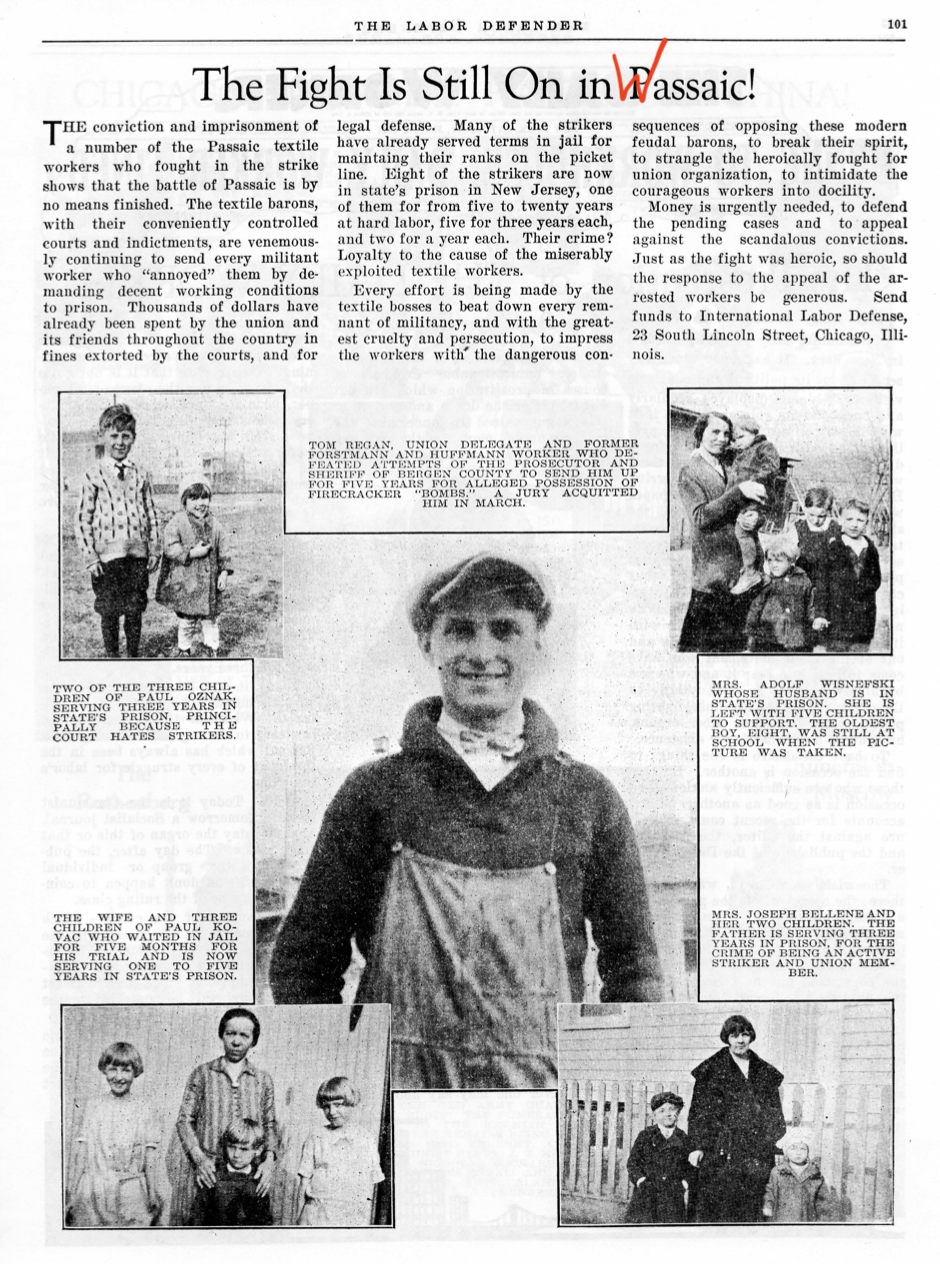
Altered Page from Labor Defender
The Amenia Free Review exists to cultivate a socialist avant-garde in America.
This feels a little lofty. Pipedreamish, kinda outside CVS shouting at a brick wall hoping for a half-amused audience. Alas, if we could only yell louder. Or wait maybe if we make it topical. Topics please us. Topics please. We can maybe please bricks with volume and pertinence.
No. The Amenia Free Review was formed, in part, from a theory that pertinence must be manufactured; that a new context must first be created for big new conceptual shapes to fit into. Critique of capitalist disaster can be happily endless, somewhat profitable, entirely impotent. No: critique must be exceeded, a new thesis must be articulated, something impossible for capitalist cultures to swallow without choking. The name of the necessary cyanide is revolutionary socialism, and it's very very sexy.
But the same forces that make socialism necessary render its construction nearly impossible. Socialism––nothing less than collective ownership over our shared production––cannot currently be conceived of within the mass of American consciousness; in fact our culture has been very intentionally inoculated against it. So here's our paradox: to construct socialism, we require a certain kind and degree of consciousness; to construct said consciousness, we need certain conceptual materials widely precluded by our form of social organization.
In its creation and reproduction of ideology, culture plays a crucial role in determining permissibility (in what is allowed to be talked about) as well as permeability (in what we are even able to see). Chiefly absent from ours is a materialist vision of history. The AFR believes that not only is historical materialism’s basic theory incontrovertible, but that if this idea could be smuggled into popular thought, it could eradicate a million confusions, synchronize a disparate mass, maybe take a year or two off empire's life. This is surely optimism. But it is a revolutionary one.
That's the second part of AFR's reason to be: how do we inject the revolutionary bacilli into the greater culture? A missile's probably quickest. The Act, undoubtedly, germinates: when we see ourselves beat ICE back to protect each other, when we force our tents into impermeable institutions, when we hear the glass shatter and see the precinct burning we are changed, because we have seen ourselves, often for the first time. But this glimpse is brief. Memory is malleable. All too often, the real scope of this act, the new polities it forms, is invisible, or functionally so, to many of us. Its method is incomplete.
We must then constantly reintroduce the consciousness it creates into our collective sphere; it must exist and be subsequently insisted upon, elaborated upon, furthered into its own institutions. The only way to pierce that veil is with something sharp.
Since the collapse of the Soviet Union the ostensible avant-garde in America has been first shorn of all revolutionary content and subsequently appropriated by the coordinated cultural front of a rapidly consolidating fascist bloc. Gone is even the questionably Marxist commitment of language poetry, gone is all collective memory of the proletarian culture built over decades of struggle, gone is the knowledge of surrealism's anticolonial and communist roots, all replaced with a fake history, a false inheritance of poppy abrogation, a fuck-you politics of enforced joy and an academic quietism enshrined by its fundamental cowardice.
The Amenia Free Review is here to make Us into a missile and point it at that absence. We are loading it with the best of everything that we can find, committed to a poiesis of the actual and the new forms necessary to adequately express it. We are looking for reality where it squeals, then getting enough distance to watch. And we find ourselves rediscovering a big tradition, one that might forever excuse us from troughs of slop filled with new kinds of malicious feed. Mostly we feel lucky to continually find so many others, already working on some form of the same.
We hope AFR can help connect them. "Socialist," to us, is a multitendency word, and though we have our proclivities, we think broadly of communists, anarchists, social democrats, the shades within and between them. We think the project works best this way. "Avant-garde" only counts if the culture follows, but we see two things to attempt: an insistence on impermissible subjects, and new forms to inaugurate their arrival. Ideally both. In some work, this doubling already exists; other times we celebrate components yet to be fully assembled. We think it's possible to make a cohesive culture out of these things. We see no other way to start than to start, light something, yell bang.
Issue 1. Bang